The country opened its airspace for all flights except for New Delhi, Bangkok and Kuala Lumpur on March 27.

Xi will attend the second informal meeting with Modi at Mahabalipuram near Chennai from October 11 to 12 and pay a state visit to Nepal on October 13, Foreign Ministry spokesperson Hua Chunying announced on Wednesday.

Pakistan on Thursday asked the world community to play its role in the peaceful resolution of the Kashmir issue, saying it wants to resolve it in a peaceful manner and through result-oriented and sustained dialogue.
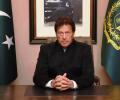
The Pakistani PM explained how the war-like scenario could erupt in the middle of the current tensions between the two nuclear-armed neighbours. He said Kashmiris would protest and India would launch a crackdown on them.

In the past, India strongly rejected references made to Jammu and Kashmir in a previous joint statement by Pakistan and China.
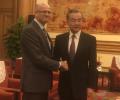
Gokhale's visit for bilateral consultations is taking place amid renewed optimism that the vexed issue of listing of Pakistan-based Jaish-e-Muhammed chief Masood Azhar as a global terrorist by the United Nations, which has been stalled by China, is headed for a resolution in the coming weeks

The external affairs minister said India will continue to take all necessary steps to safeguard the nation's security and safety of all citizens.

Imran said the previous Pakistani governments "should not have pledged what they could not deliver."

'Is the application the Press Council's voice or the government's? 'It has been reported that other members of the PCI were taken aback at the Press Council's application. 'These members need to publicly question the chairman to redeem their own positions,' says Jyoti Punwani.
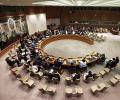
The United Nations Security Council will hold an emergency meeting this week to discuss the Ebola outbreak that has gripped West Africa and claimed over 2,200 lives, the president of the 15-member body has said.

'To get a 100 per cent consensus document without any reservation, any bracket, any chair summary is unprecedented in the history of multilateral forums.'

Swaraj emphasised that the UN must accept it needs fundamental reform.

"Ambassador Mittal raised India's concern that Afghanistan's soil should not be used for anti-Indian activities and terrorism in any manner," it added.

The United States, the United Kingdom, the European Union and NATO have expressed concern on the new law and warned of retaliatory measures.

After Pyongyang tests a missile potentially capable of reaching the US, Dr Rajaram Panda explores the realistic -- and peaceful -- options before Donald Trump and the international community at large.

'There are reports that the Biden administration is contemplating imposing CAATSA sanctions against India, the largest democracy on Earth'
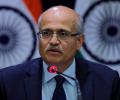
Gokhale will be visiting China for regular consultations, the Indian Embassy in Beijing said on Saturday.
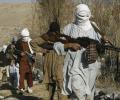
Amid deepening concerns in China over the regrouping of the ETIM, blamed by Beijing for all the violent attacks in its volatile Xinjiang province and elsewhere in the country, Foreign Minister Wang Yi met Mullah Baradar at Tianjin and sought to prevail on him to build a 'positive image and establish a broad and inclusive political structure that suits Afghanistan's national realities'.
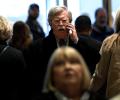
'Unlike Trump, who has an isolationist approach, Bolton would like to roam around the world, trampling upon any sign of dissent,' says Ambassador T P Sreenivasan.

Iran's Attorney General Mohammad Javad Montazeri said that the morality police 'was abolished by the same authorities who installed it', The New York Times reported.
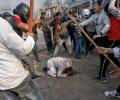
'It may serve the interests of the rule of law if the Supreme Court were to appoint the UNHCR as amicus curiae in the CAA case,' notes Ambassador M K Bhadrakumar.
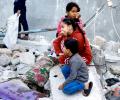
'This award is funded by American money so I took this decision.'

The suspension of US aid to Pakistan, which was announced by President Donald Trump in January 2018, remained in effect throughout 2019, the State Department said.
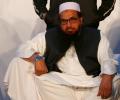
The perpetrators of the 2008 Mumbai attack, who shot dead 166 people, had confessed to details that should have been enough to hang him, but Pakistan enjoyed his anti-India rhetoric and let him spread his tentacles. A revealing excerpt from Khaled Ahmed's Pakistan's Terror Conundrum.

'The sooner Pakistan and India face these geopolitical realities, the better it will be for their own security and prosperity,' observes Ambassador M K Bhadrakumar.

Regional States will be worried that the US's nascent engagement with the Taliban behind the fig leaf of humanitarian aid enables the return of US intelligence personnel to Afghanistan, observes Ambassador M K Bhadrakumar.

In his opening remarks at a ministerial meeting in Tokyo of the Quadrilateral coalition, also known as 'Quad', External Affairs Minister S Jaishankar said India remained committed to a rules-based world order, respect for territorial integrity and sovereignty, and peaceful resolution of disputes.

Arpi deserves to be complimented for the commitment and hard work that have gone into this production. The frustrations of seeking reliable documentation from the catacombs of the Indian bureaucracy did not deter him from going after the best information available, and the result is one that he can take much satisfaction in. Ambassador Prabhat P Shukla, Member Advisory Council, Vivekananda International Foundation, reviews Claude Arpi's The End of an Era: India Exits Tibet.

On June 12, history was made when United States President Donald Trump shook hands with North Korean leader Kim Jong-un and had extensive talks at Capella Hotel in Singapore. However, this meet has come after several twists and turns. Following is the chronology of key events leading to a historic summit between the two leaders.

India has said that terror groups like Lashkar-e-Tayiba do not "live on love and fresh air", expressing regret that they receive funds despite being slapped with sanctions by the United Nations, as the world body reaffirmed the need to cut the monetary lifeline of terrorists.

The United States has announced the end of its 20-year-old war in Afghanistan as the last American military flight flew out of the Hamid Karzai International Airport in Kabul shortly before the August 31 deadline.

'It will be foolhardy to overlook that this stunning shift in China's stance comes as the culmination of the severely damaged India-China relationship under the present government,' says Ambassador M K Bhadrakumar.

The joint statement issued after Prime Minister Narendra Modi and President Barack Obama's first-ever summit is high on intent and ambition. Notably missing from the statement is India's refusal to be America's partner in its war against ISIS.

Since Balakot strike, India is trying to build maximum pressure on Pakistan on the issue of terrorism, sources said.
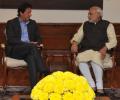
'Any 'de-escalation' that brings down tensions will deprive the BJP of a plank with seamless possibilities to project PM Modi as the 'Iron prime minister' and hype up jingoism in the upcoming election campaign,' notes Ambassador M K Bhadrakumar.

There were reports that there was was dissent in the US President's regime over North Korea.

If New Delhi finds itself out in the cold in Afghanistan, both the Congress-led UPA and BJP-led NDA have only themselves to blame. Each has been in power for a full decade from 2001, without reaching out to the Taliban, points out Ajai Shukla.

India has said that the terrorist attack in Uri in Kashmir has highlighted Pakistan's desire to use "poison" instead of dialogue as it lodged a strong protest against Islamabad at the Non-Aligned Movement summit at Margarita Island in Venezuela for its "mischievous" and "malignant" support to terror.

Meanwhile, Pakistan said the terrorist attack in Pulwama district is "a matter of grave concern" even as it strongly rejected Indian media and government's allegations of the country's link to the strike "without" probe.
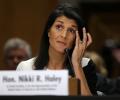
If confirmed by the US Senate, Haley, 44, would be the first Indian-American to serve in a Cabinet-level position in any presidential administration.
